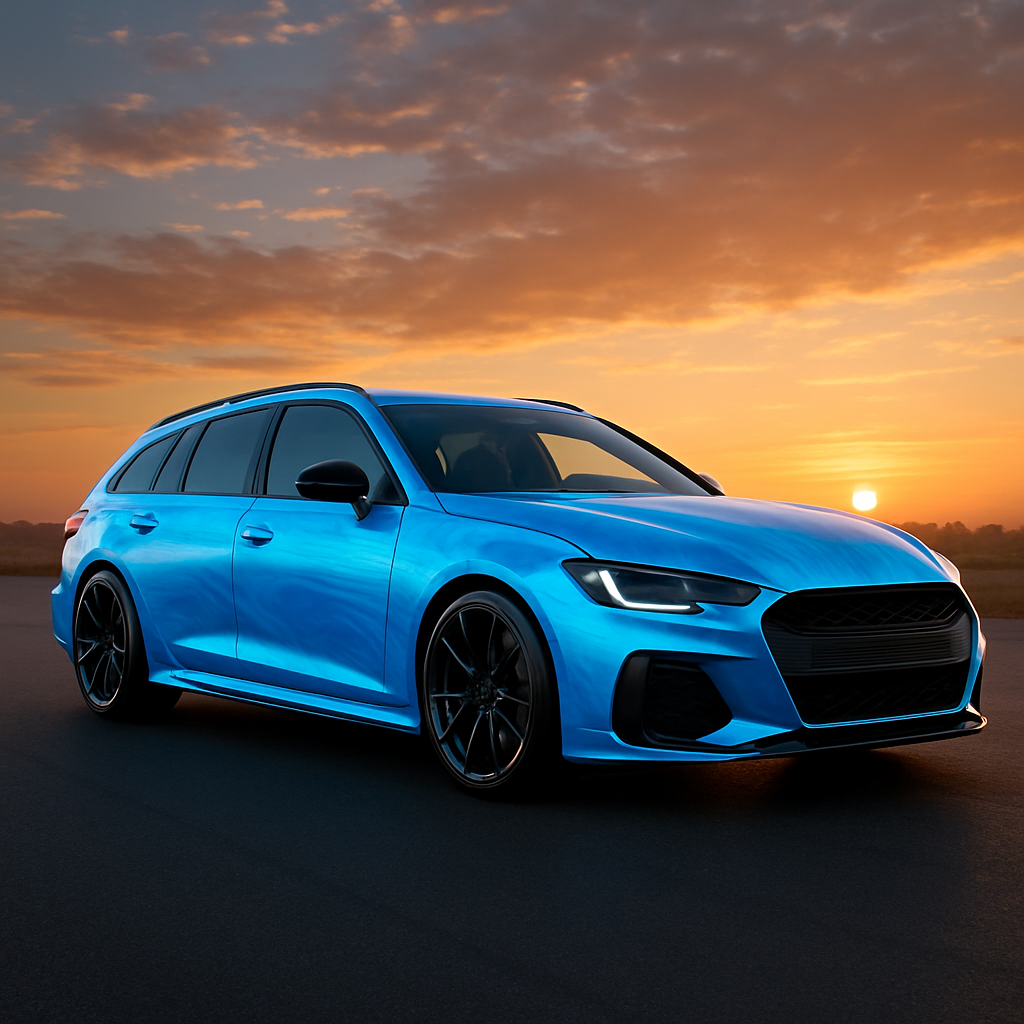
Should you use a 3D car wrap visualizer or a photo-based AI tool? We compare both approaches on accuracy, customer trust, and sales impact.
The debate between 3D car wrap visualizers and photo-based AI tools is one every wrap shop owner eventually faces. Both promise to show customers what their finished wrap will look like. Only one consistently delivers results that customers actually trust.
What Is a 3D Car Wrap Visualizer?
3D car wrap visualizers use three-dimensional vehicle models to simulate how a wrap will look. In practice, they suffer from a fundamental problem: they look like 3D models. Customers can tell the difference between a rendered image and a photo, and that visual gap erodes trust.
Why 3D Renders Fail to Convert Customers
The moment a customer recognizes they are looking at a computer-generated image, their brain shifts from emotional engagement to analytical skepticism. They start asking whether the colors are accurate. 3D models also cannot replicate the customer's specific vehicle, custom wheels, window tint, and modifications are all missing from a generic template.
How Photo-Based AI Visualizers Work Differently
Photo-based AI wrap visualizers take a photo of the customer's actual vehicle and digitally apply the wrap using computer vision. The AI identifies body panels, curves, reflections, and surface texture from the real photo, then blends the wrap finish into the existing lighting conditions. The result looks like a real photograph of a wrapped car, because it is built from one.
Accuracy Comparison: 3D vs Photo-Based
- 3D models use approximated lighting, photo AI uses the actual lighting in the customer's photo
- 3D templates show generic vehicles, photo AI shows the customer's exact car with their real modifications
- 3D renders look artificial to trained eyes, photo AI previews look like finished wrap photographs
- Color accuracy is higher in photo AI because real surface reflections are preserved
Key Takeaways
- 3D car wrap visualizers look computer-generated, customers notice and trust them less
- Photo-based AI uses the customer's actual vehicle, preserving real lighting and surface detail
- Photo AI triggers emotional ownership because customers see their specific car, not a generic model
- For sales consultations and lead conversion, photo-based AI outperforms 3D visualization