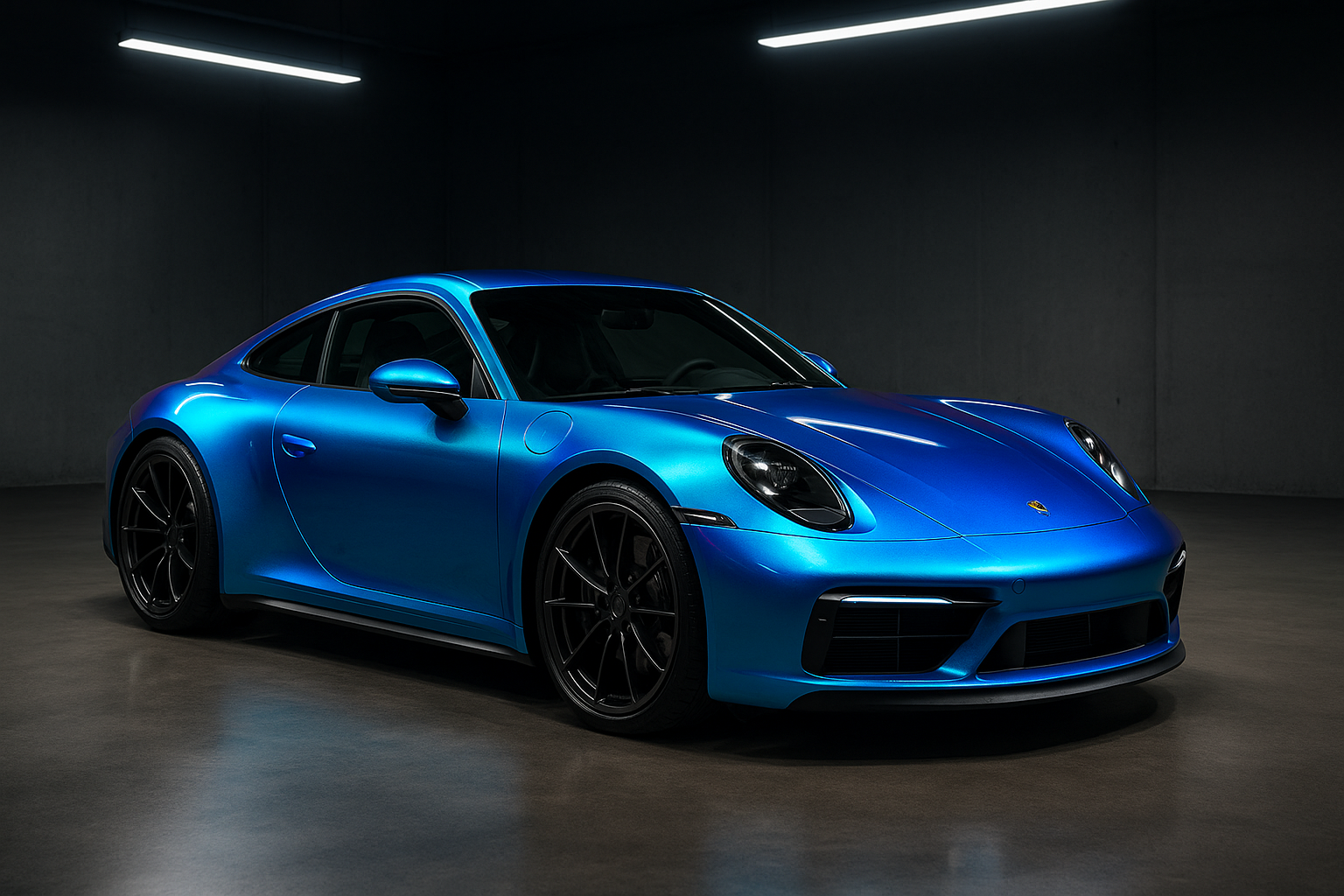
Discover the top AI trends transforming vehicle wraps, from real-time visualization to predictive design and sustainable workflows, shaping the future of the wrap industry.
The wrap industry is experiencing a rapid evolution driven by artificial intelligence. What used to require manual mockups, guesswork, and trial-and-error is now being transformed by intelligent, automated, and data-driven workflows. As demand for customization grows, shops and car owners alike are turning to AI tools to deliver faster, more accurate, and far more creative wrap solutions.
At the forefront of this transformation stands wrapmyride.ai, a platform that leverages AI to enable realistic wrap previews, streamline workflows, and unlock new levels of personalization. The trends shaping this future go far beyond simple color changes. They involve generative design, predictive analytics, digital-first workflows, sustainability, and immersive customer experiences. In this article, we explore the most impactful AI trends redefining the wrap industry today and why businesses embracing them are positioned to lead the market.
Real-Time Visualization and Instant Mockups
One of the most powerful AI trends in vehicle customization is real-time visualization. With AI-powered wrap visualizers, users can upload a photo of their vehicle, the exact make, model, and angle, and within seconds receive a photorealistic preview of their chosen wrap. This dramatically reduces uncertainty, speeds up decision making, and improves customer satisfaction.
Before AI, wrap shops relied on painted swatches, generic templates, or manually edited photos — often leading to mismatched expectations and costly revisions. Today, tools such as wrapmyride.ai and other AI wrap generators produce highly accurate depictions, capturing details like reflections, lighting, and body contours.
This shift isn’t just about convenience; it transforms the sales process. Delivery that once took hours or days now happens in minutes. Shops can present multiple options to clients with minimal overhead. Clients see the potential immediately and make faster, more confident decisions.
Generative Design and Custom Wrap Creativity
Beyond simply choosing a color or finish, AI is enabling generative design, where wrap patterns, textures, and even complex graphics are generated dynamically by algorithms. This trend opens up creative possibilities that were previously impractical or extremely time consuming to produce.
In broader automotive design, AI-driven generative modeling helps designers explore novel shapes, improvements, or aesthetic variations rapidly, shifting the workflow from weeks of sketching and rendering to hours or days.
For wrap shops and enthusiasts, generative design means unique, one-of-a-kind wraps: gradients, geometric patterns, custom textures, color blends, or even bespoke artwork tailored to a vehicle’s curves and lines. As AI continues to evolve, we expect generative wrap tools to become a standard offering, giving shops a major differentiator in a crowded market.
Data-Driven Insights and Predictive Trends
AI isn’t just transforming visuals, it is redefining business strategy. With wrap visualizer platforms capturing data about which wrap styles, colors, and finishes customers experiment with most, shops gain unprecedented insight into market preferences before printing a single roll.
This data allows shops to forecast demand more accurately, stock optimal materials, and tailor their inventory to match real trends. It can also inform marketing strategies by highlighting the most popular styles, vehicle types, and customer demographics.
In the wider automotive industry, AI adoption is already influencing how manufacturers and service providers optimize manufacturing, design, and supply chains using predictive analytics.
By leveraging these insights, wrap shops can reduce waste, anticipate market shifts, and stay ahead of competitors who rely solely on intuition or outdated assumptions.
Sustainability and Waste Reduction Through Digital Workflows
Sustainability is emerging as a major theme in the auto customization world, and AI is playing a critical role. AI-powered wrap visualizers and design tools significantly reduce material waste by eliminating unnecessary test prints, sample swatches, and redo jobs. Virtual previews allow customers to choose confidently before committing to physical materials.
This digital-first workflow mirrors the principles of digital prototyping, used in product design and manufacturing to reduce reliance on physical prototypes. Digital prototyping reduces resource use, lowers waste, and accelerates development. Applied to vehicle wraps, it means fewer wasted vinyl rolls, less excess inventory, and lower environmental impact.
As environmental consciousness grows among consumers and businesses, wrap shops embracing AI and sustainable workflows will gain a competitive edge — appealing to clients who value responsible choices without compromising creativity or style.
Augmented Reality and Immersive Customer Experiences
The next frontier for the wrap industry is augmented reality (AR) and virtual reality (VR), combining AI visualization with immersive, real-world previews. Imagine a customer pointing their smartphone at their car and instantly seeing multiple wrap options applied in real time, from every angle, in their driveway.
Some AI wrap platforms already offer 3D mockups and multi-angle previews to approximate this experience.
As AR technology becomes more accessible, wrap shops that integrate AI-powered visualizers with AR previews will offer a shopping experience far superior to static photos or even video. This will likely become a major differentiator — elevating customer satisfaction, speeding up sales, and reducing returns or dissatisfaction.
AI-Assisted Workflow Automation and Business Efficiency
AI’s impact isn’t limited to design and visualization. It is transforming backend operations and business workflows as well. In the broader automotive sector, AI-driven design automation and generative modeling accelerate prototyping, optimize production, and lower costs.
For wrap shops, this means fewer manual mockups, faster quote turnaround, more efficient project management, and improved resource allocation. Designers and sales staff can spend less time on repetitive tasks and more time on creativity, quality, and client interaction.
Moreover, when AI visualization becomes integrated into daily operations, from customer inquiry to final installation, shops can scale more effectively, handle higher volume without sacrificing quality, and maintain consistency across projects.
Elevated Customer Trust and Brand Differentiation
In an industry driven by aesthetics and personal preference, trust is essential. Customers must believe that what they envision is what they will receive. AI-powered wrap visualizers deliver that clarity. When clients see a realistic preview of their vehicle with their chosen wrap, confidence increases dramatically.
The use of AI signals that a shop is modern, professional, and committed to precis