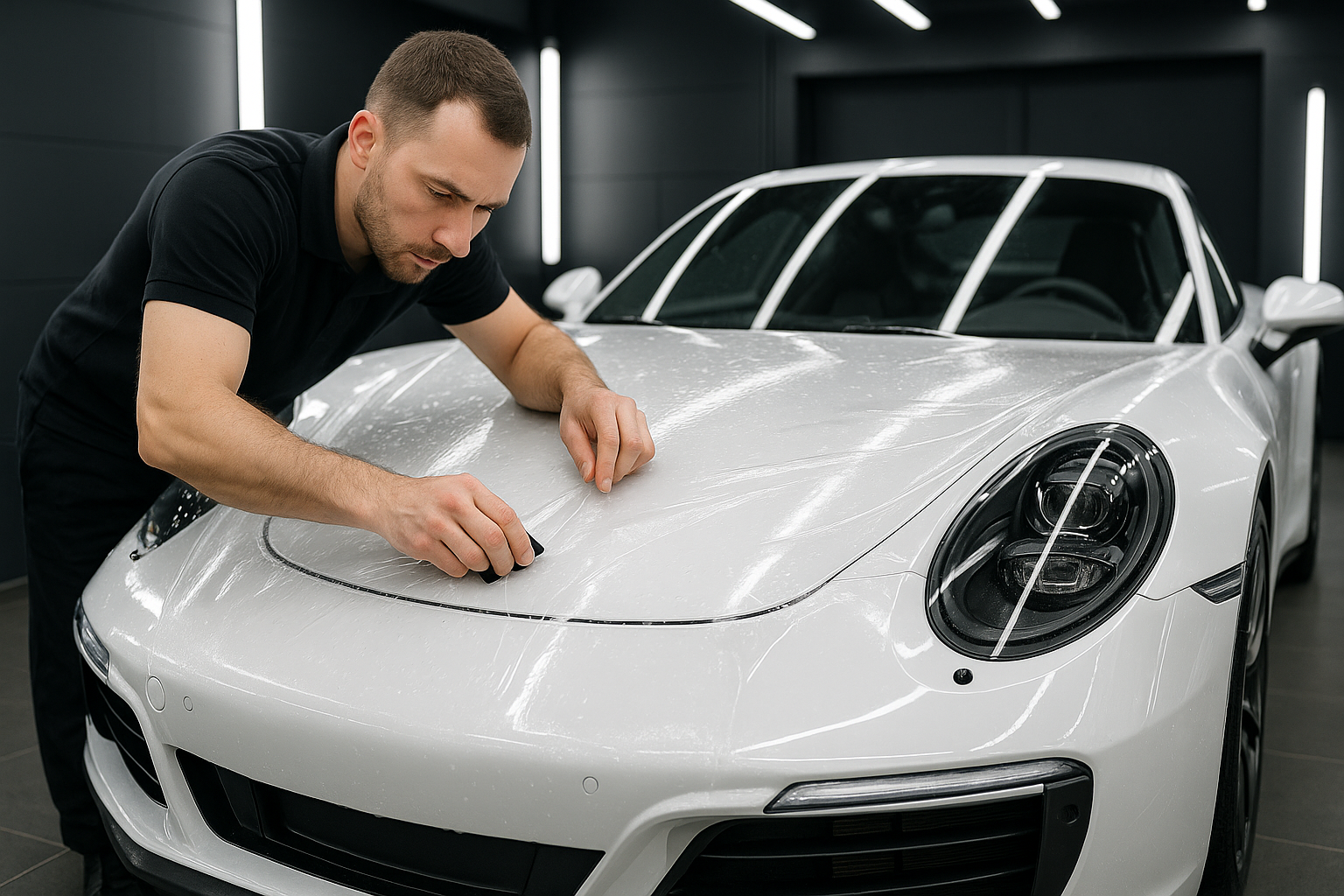
Color PPF vs vinyl wrap — both change the color of your car, but they work differently and serve different needs. Here is the complete 2026 comparison of cost, protection, durability, and which is right for your vehicle.
Color PPF and vinyl wrap are two popular ways to change the color of a vehicle while keeping the original paint intact and reversible. Both are applied over factory paint and can be removed, but they differ significantly in how they work, what they offer, and what they cost.
If you are deciding between color PPF and vinyl wrap for your next vehicle project, this guide covers everything you need to make the right choice.
What Is Color PPF?
Color PPF, or paint protection film, is a thick, urethane-based film originally developed to protect vehicle paint from rock chips, scratches, and road debris. Standard clear PPF is transparent and used purely for protection.
Color PPF adds pigment or a finish effect to the film while retaining all the protective properties of traditional PPF. Popular color PPF finishes include stealth matte, satin, gloss, satin chrome, and solid color options.
Because color PPF is self-healing — meaning minor surface scratches disappear when heat is applied — it offers protection significantly beyond what vinyl wrap can provide.
Major color PPF brands include STEK, Avery Dennison Color PPF, XPEL Color, and Suntek Color PPF.
What Is Vinyl Wrap?
Vinyl wrap is a thin, pressure-sensitive adhesive film applied over vehicle paint to change its color or finish. Vinyl wrap has been used for vehicle customization for decades and is available in thousands of colors and finishes from brands like 3M, Avery Dennison SW900, KPMF, Inozetek, and more.
Vinyl wrap does not have the self-healing property of PPF and offers lighter paint protection — it will shield against minor UV damage and light abrasion but will not stop rock chips the way PPF does.
Color PPF vs Vinyl Wrap: Protection
Color PPF wins dramatically on protection. As a thick urethane film, it absorbs impacts from road debris, gravel, and minor strikes that would chip or scratch paint through a vinyl wrap. Self-healing properties allow surface-level scratches to disappear with heat application.
Vinyl wrap provides minimal protection against impacts. A stone chip will still penetrate through vinyl and damage the underlying paint. It does protect against UV fading and light surface abrasion, but it is not a substitute for paint protection film on high-wear areas like the front bumper, hood, and mirrors.
Color PPF vs Vinyl Wrap: Cost
Color PPF is significantly more expensive than vinyl wrap.
A full vehicle color PPF application typically costs $5,000–$9,000 depending on vehicle size, brand, and installer. Front-only coverage (hood, bumper, mirrors, fenders) runs $1,500–$3,500.
A full vehicle vinyl wrap typically costs $2,500–$6,000 for a standard car, $4,000–$10,000 for larger vehicles. Premium brands and complex designs increase cost.
For most customers wanting a color change on a budget, vinyl wrap is the practical choice. For customers who want color change with serious paint protection — especially on a luxury or sports car — color PPF justifies its premium.
Color PPF vs Vinyl Wrap: Durability
Color PPF typically lasts eight to ten years or more when maintained properly. The film is significantly thicker and more durable than vinyl wrap.
Vinyl wrap typically lasts five to seven years with proper care. UV exposure, heat cycles, and car washes all reduce longevity.
Both can be removed without damaging the factory paint underneath, as long as removal is done carefully and the original paint was in good condition before application.
Color PPF vs Vinyl Wrap: Color and Finish Options
Vinyl wrap wins on color variety. With thousands of options across dozens of brands, vinyl wrap offers finishes that PPF cannot match — including color-shift films, brushed textures, carbon fiber, and unlimited custom colors.
Color PPF is more limited in its color and finish range. The focus is on satin, matte, and gloss variations with a smaller color palette. The range is expanding but remains much narrower than vinyl wrap.
Which Should You Choose?
Choose color PPF if you have a luxury or high-value vehicle, prioritize paint protection alongside the color change, drive on roads with heavy debris or gravel exposure, or plan to keep the vehicle long-term and want maximum durability.
Choose vinyl wrap if you want the widest range of color and finish options, are working with a tighter budget, want to change the color more frequently, or are customizing a vehicle where paint protection is less critical.
Many enthusiasts combine both: applying PPF to high-impact areas like the front bumper, hood, and mirrors while using vinyl wrap on the rest of the vehicle for the broadest color options at a reasonable total cost.
How to Preview Both Before Installation
WrapMyRide AI includes color PPF swatches from STEK, Avery Dennison, and XPEL alongside vinyl wrap options from 3M, KPMF, Inozetek, and more — all in a single visualizer. Upload a photo of your car and preview any PPF or vinyl finish on your real vehicle before booking.