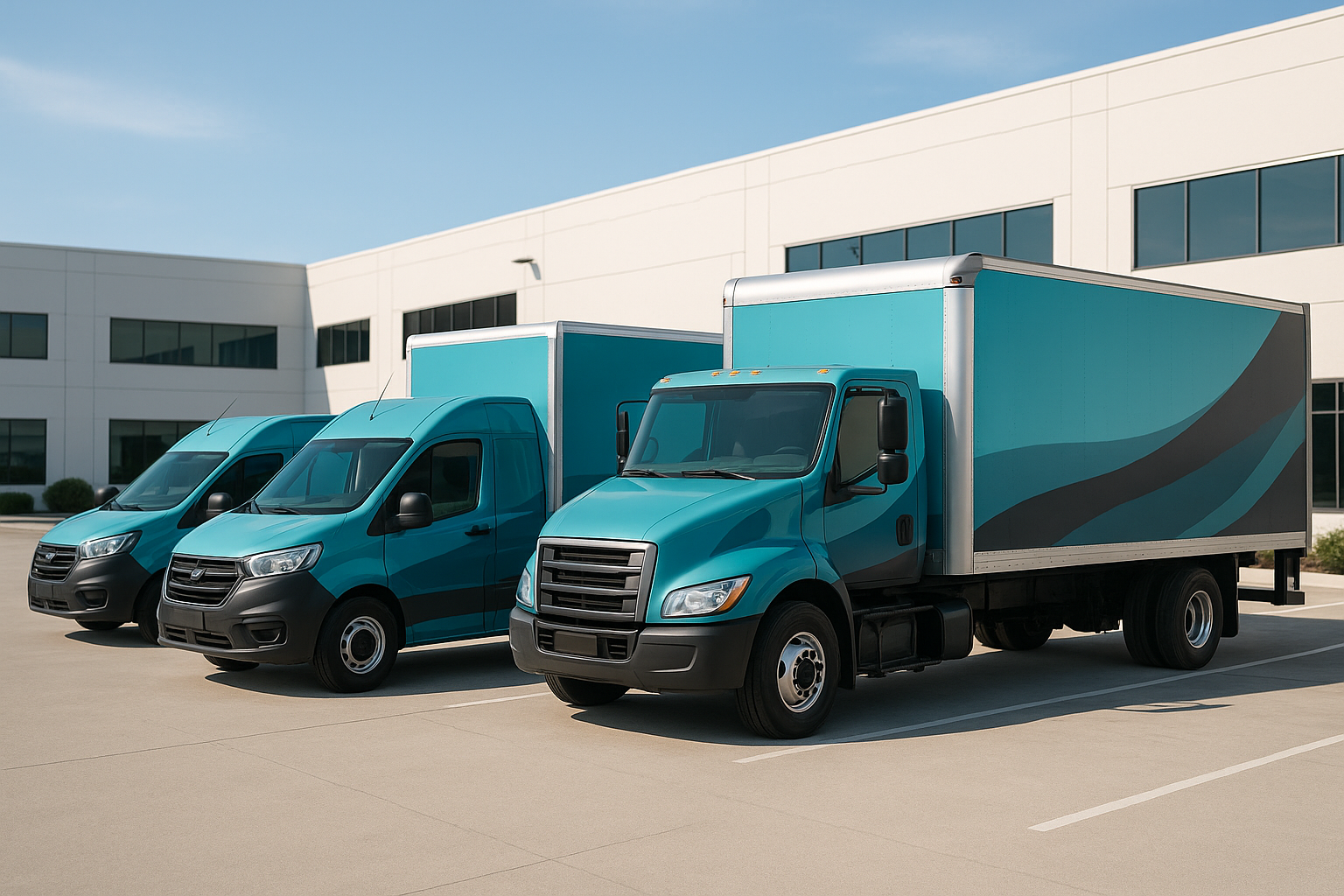
Phase 2 brings commercial wrap workflows, fleet branding, white label tools, and real-time visualization to WrapMyRide.ai.
Every industry has a moment when a tool arrives that makes the old way of doing things feel dated. For the wrap industry, that moment just arrived. Phase 2 of wrapmyride.ai is officially live and it marks a turning point for how wraps are sold, visualized, approved, and delivered across consumer, commercial, and enterprise environments.
This upgrade is more than a product improvement. It represents the beginning of a new category: wrap visualization as a sales and operations workflow. For the first time, wrap shops, fleet managers, automotive dealerships, graphic designers, and white label SaaS platforms have a unified tool to visualize wraps in real time, manage commercial branding assets, and accelerate approvals without waiting for full design proofs or print files.
The industry has been asking for speed. Phase 2 delivers it.
The industry has been asking for clarity. Phase 2 makes it visible.
The industry has been asking for commercial support. Phase 2 introduces it at scale.
For decades, wraps have been sold through a mix of trust, imagination, and manual proofing. That era is fading. Phase 2 invites the industry into a future where software removes friction, closes deals faster, and gives customers visual confidence before production begins.
Why Visualization Matters Now More Than Ever
Wrapping used to be purely about transformation, color change, finishes, customization, and personal style. But the wrap market has evolved. It is now a high-value category that spans:
• Consumer automotive personalization• Commercial fleet branding• Franchise rollout and consistency management• Dealership upfits and add-on revenue packages• PPF and tint bundles• Trade services (HVAC, roofing, plumbing, electrical)• Food trucks and mobile hospitality• Rental, logistics, and delivery fleets• B2B brand activations and event wraps• Franchise brand guidelines and asset control
Consumers today expect to see before they buy. Commercial buyers expect precision and predictability. Dealers expect rapid approvals. Enterprise fleet customers expect brand consistency across vehicles and locations. Visualization is not an accessory to the process anymore. It is part of the process.
The friction has always been the same: customers struggle to visualize, designers lose time on revisions, and approval cycles stretch longer than they should. Phase 2 compresses that gap.
What Phase 2 Includes: The Technical Highlights
Phase 2 introduces a long list of new capabilities that strengthen internal workflows and elevate customer-facing sales experiences.
Major enhancements include:
• White label users can now create, save, and display custom colors• Vehicle library support added directly within the widget• Wrap asset library for fast visual configuration• AI suggestions and warnings for accuracy and production• New toolbar for crop, zoom, undo, redo, and upload controls• Full asset upload management with layer control, resizing, drag, rotate, and positioning• Commercial wrap support for fleet graphics, branding, and signage• Optional sidebar visibility control for cleaner UI during client demos• Guided onboarding Tour for first time users• History management for better workflow tracking• Reference image support for high accuracy previews• Default prompt settings now configurable by customers and admin
This is not an incremental update. It is a foundational shift in capability and use case coverage.
Introducing Commercial Wrap Workflows: The Big Story of Phase 2
The wrap industry has two sides: consumer driven personalization and commercial driven brand deployment. The consumer side is visual, emotional, and experiential. The commercial side is operational, repeatable, and strategic.
Dealers, franchise operators, fleet managers, and brand teams care about:
• Scale across multiple vehicles• Surface specific placement• Asset consistency and brand standards• Approval workflow transparency• Procurement and cost management• Delivery timelines and uptime
For the first time, wrap visualization software can speak both languages. Phase 2 brings commercial and fleet workflows into the platform. Shops can now simulate:
• Utility vans• Cargo vans• Box trucks• Pickup trucks• Delivery vehicles• Refrigerated transport units• Trades and contractor vehicles• Service fleets and rental fleets• Food trucks and trailers
This unlocks a level of clarity that previously required manual design proofs, multi round revisions, and extended back and forth between design, sales, and client.
Commercial customers are among the highest-value and highest lifetime value wrap buyers. Their challenge has never been budget. Their challenge has been confidence and consistency. Phase 2 removes the friction that slows down deals and approvals.
Why Phase 2 Matters for Wrap Shops
Shops live in a hybrid world. They need to win consumer jobs but they also need to capture high-margin commercial contracts. Visualization has always been a sales problem disguised as a design problem.
The typical wrap sale breaks down in predictable ways:
- The customer can’t visualize the final product
- Designers get pulled into sales prematurely
- Revisions slow down approvals
- The shop carries the cost of delay
- High-ticket jobs become high-touch jobs
Phase 2 flips the equation. It lets shops:
• Show before building• Explain before producing• Upsell before quoting• Standardize before designing• Close before revising
It moves visualization from the end of the process to the beginning. That alone changes outcomes.
Why Phase 2 Matters for Fleet and Commercial Buyers
Fleet wraps are not emotional purchases. They are strategic investments in visibility, brand consistency, and lead generation. Commercial teams care about:
• uniformity• coverage• compliance• clarity• timeline• uptime• revisions• procurement
Visualization accelerates decision-making by removing abstraction. Commercial buyers can now preview:
• logo placement• typography treatment• tagline scaling• surface coverage• color accuracy• brand positioning• multi vehicle variations
and do it before a designer spends time building full production files. This reduces friction, derisks purchasing, and increases certainty.
Why Phase 2 Matters for Dealerships
Dealerships are entering a phase of higher-margin aftermarket products to counteract margin compression on new vehicles. Wraps, PPF, tint, and personalization packages are rapidly gaining adoption in retail environments. But dealers often struggle to sell add ons without visuals.
Phase 2 gives dealerships:
• faster upsells• predictable showroom presentations• consistent brand positioning• repeatable workflows• higher accessory conversion rates
Accessories have always needed imagination. Phase 2 replaces imagination with evidence.
Why Phase 2 Matters for White Label Partners
White label users include:
• SaaS platforms• manufacturers• distributors• media companies• creative studios• online marketplaces
They ne