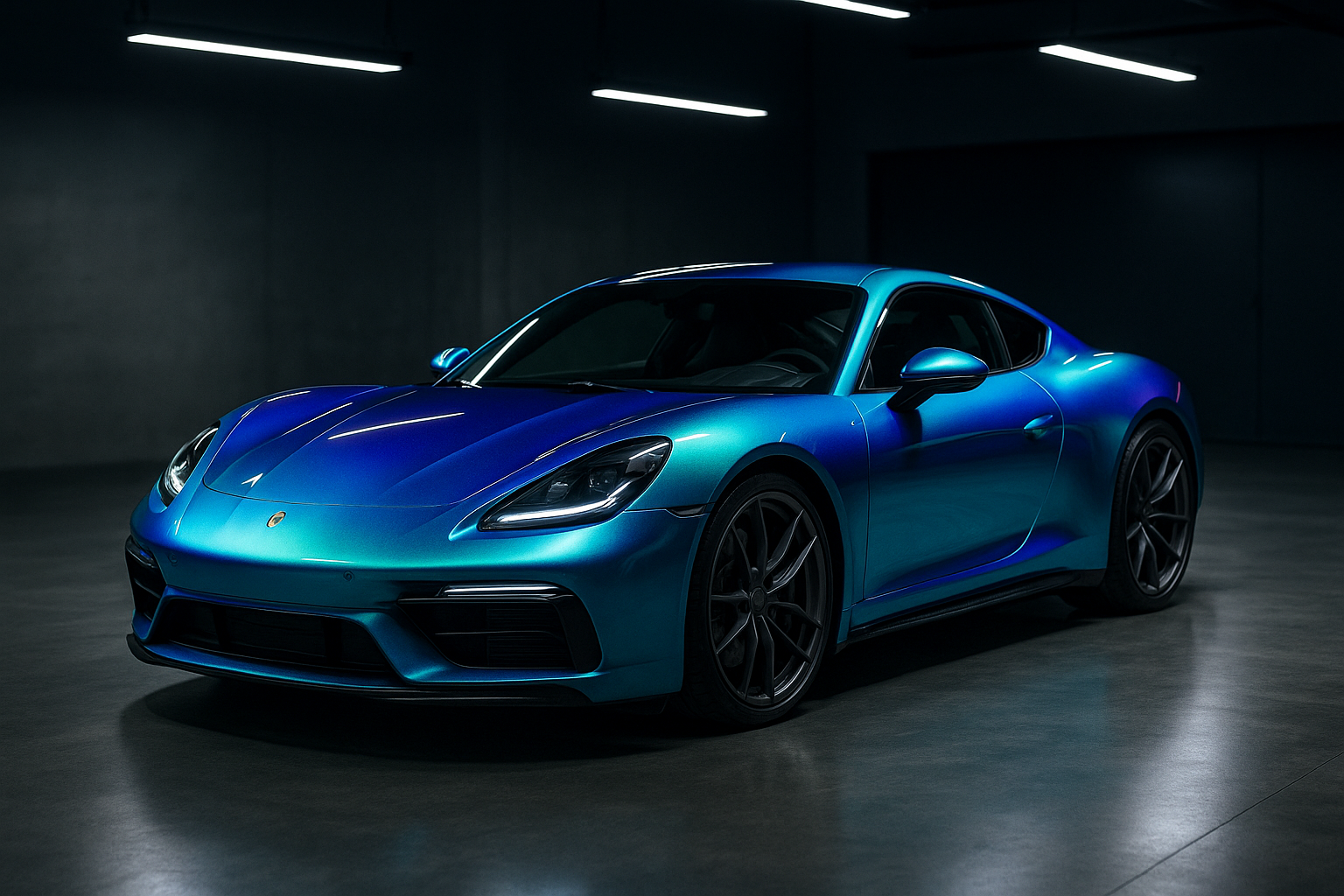
Car wrap visualizers come in two types: tools that apply colors to 3D vehicle models, and tools that apply colors to your own car photo. Here is why real photo visualization produces better results — and why it closes more sales.
When evaluating car wrap visualizers for your shop or personal use, you will quickly find that they fall into two distinct categories: tools that apply wrap colors to a pre-rendered 3D vehicle model, and tools that apply wrap colors directly to a real photo of your own car.
The difference is not just cosmetic. It fundamentally changes how convincing the preview is, how closely it represents the actual installed result, and — most importantly for shops — how effectively it converts curious visitors into booked customers.
How 3D Model Visualizers Work
A 3D model visualizer works by taking a pre-built digital rendering of a vehicle — usually one of dozens of common makes and models in the system's library — and applying wrap colors or finishes to that model in real time.
The advantage of this approach is speed of setup. The vendor pre-builds the car models, so there is no need for the customer to upload anything. The customer selects a car that looks like theirs from a dropdown and applies colors.
The limitations are significant. The 3D model is never exactly your car. The lighting in the render is artificial. The body proportions may be slightly wrong. The reflections in the paint are simulated, not real. The color may look different on the rendered model than it would on your actual car under real outdoor lighting.
Customers instinctively notice this disconnect. When they look at a wrap color applied to a 3D model, they see a car that looks like theirs, not their car. That psychological distance reduces conviction.
How Real Photo Visualizers Work
A real photo visualizer uses AI computer vision to analyze a customer-uploaded photo of their own vehicle. The AI identifies the car's body panels, windows, and trim, maps the vehicle's actual reflections and lighting conditions, and then applies the chosen wrap color or finish directly to the real photo.
The result is a preview showing the wrap on the customer's actual car — with real reflections from the environment in the photo, the car's real body proportions, and realistic shadow and highlight behavior.
The psychological impact is fundamentally different. When a customer sees a wrap color applied to their own car, they see their car. The reaction shifts from "that looks nice on a car like mine" to "that is my car." That shift dramatically increases conversion.
Accuracy: Real Photo Wins
Real photo visualization is more accurate than 3D model visualization for several reasons.
Body accuracy: No two cars of the same make and model look identical after years of individual wear, trim levels, wheel changes, and minor modifications. A 3D model is a generic representation. A real photo is the actual vehicle.
Lighting accuracy: The reflections in a car's paint change dramatically based on the environment where it is photographed. A 3D render uses simulated studio lighting that rarely matches real-world parking lots, driveways, or streets. A real photo preserves the actual lighting the customer will experience.
Color accuracy: How a wrap color appears under different lighting conditions is one of the most common causes of customer disappointment after installation. A real photo preview shows the color under the same lighting that exists where the customer photographed their car — a much more reliable indicator of the real result.
Conversion: Real Photo Wins by a Wider Margin
The conversion difference between 3D model and real photo visualization is significant for wrap shops.
A customer who sees a wrap color applied to their own car photo has already mentally experienced owning the wrap. They have seen their specific car transformed. The decision to book feels like the natural conclusion to an experience they have already had.
A customer who sees a wrap color on a 3D model is still imagining. They are trying to translate what they see on screen into what their car would look like. That translation step creates friction — a moment of uncertainty that sends customers back to "let me think about it."
Shops that switch from 3D model to real photo visualization consistently report higher consultation booking rates and shorter sales cycles.
WrapMyRide AI: Real Photo, 3,000+ Colors
WrapMyRide AI uses real photo visualization exclusively. Customers upload a photo of their own car — any make, model, angle, or lighting — and the AI applies wrap colors, PPF finishes, window tint, and peelable paint directly to the real photo.
With over 3,000 exact-match color swatches from 3M, Avery Dennison, KPMF, Inozetek, STEK, and more, the visualizer gives customers the most accurate possible preview of how a specific material will look on their specific car.
For shops, this means fewer hesitation moments, faster consultation bookings, and customers who arrive already knowing exactly what they want.