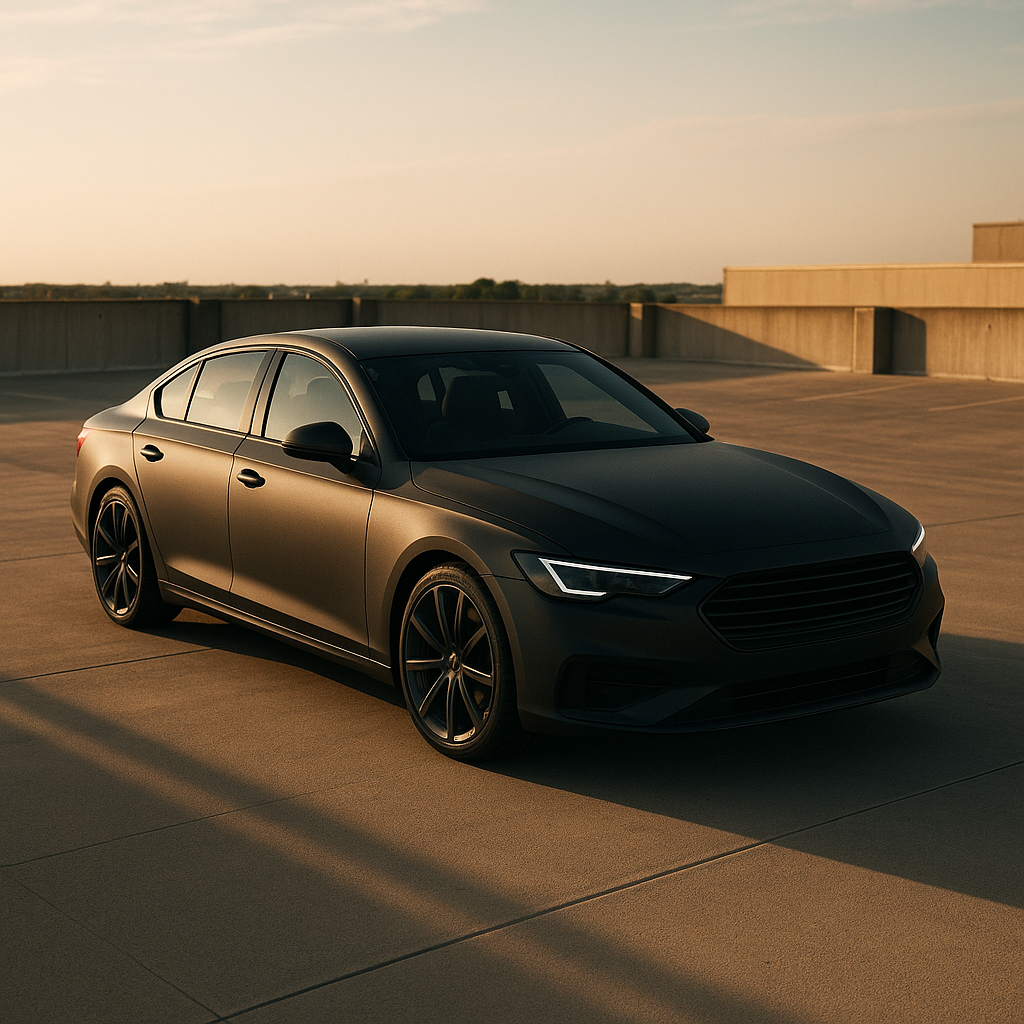
Compare satin and matte vinyl wraps by appearance, maintenance, durability, cost, and installation to choose the right finish for your vehicle.
Satin vs Matte Vinyl Wrap: Differences, Pros, and Cons
Choosing a vinyl wrap color is only part of the design process. The finish you select can change how the color looks, how noticeable imperfections are, how often the vehicle needs cleaning, and how carefully the wrap must be maintained.
Satin and matte vinyl wraps are two of the most popular low-gloss finishes. Both create a more understated appearance than a traditional gloss wrap, but they produce very different visual effects. Satin has a soft, subtle sheen, while matte eliminates most reflected light for a flatter appearance.
Understanding those differences can help you choose a finish that matches your vehicle, lifestyle, budget, and expectations for long-term upkeep.
What Is a Satin Vinyl Wrap?
A satin vinyl wrap has a low to medium level of sheen. It reflects some light, but not enough to create the sharp, mirror-like highlights associated with gloss vinyl. The result is a smooth appearance that looks refined without being overly reflective.
Satin finishes are sometimes described as sitting between gloss and matte. They can make a vehicle look more distinctive while still preserving some of the color depth and visual clarity found in a glossy finish.
Satin black is especially popular because it creates a darker, premium appearance without looking completely flat. Satin white, gray, blue, and metallic colors can also show subtle changes in tone as the vehicle moves through different lighting conditions.
What Is a Matte Vinyl Wrap?
A matte vinyl wrap has very little surface reflection. Instead of bouncing light back toward the viewer, the finish diffuses light across the surface. This gives the vehicle a flat, modern, and often more aggressive appearance.
Matte black is one of the best-known examples, but matte vinyl is available in many colors. Some products include metallic or color-shifting particles, although the low-reflection surface makes those effects more restrained than they would appear in a gloss finish.
Matte wraps are often chosen for sports cars, performance vehicles, luxury SUVs, motorcycles, and commercial vehicles that need a bold but non-reflective appearance.
Satin vs Matte: The Main Visual Difference
The simplest distinction is the amount of reflected light:
- Satin vinyl reflects a small amount of light, producing a soft glow and gentle highlights.
- Matte vinyl reflects very little light, creating a flat, muted surface.
This difference affects how the wrap’s color is perceived. Satin generally looks deeper and more dynamic because the light creates subtle movement across the body panels. Matte looks more uniform and subdued, which can make the vehicle appear larger, cleaner, or more understated.
Panel shape also matters. On vehicles with sculpted body lines, satin can emphasize curves through soft highlights. Matte tends to minimize those reflections, allowing the overall silhouette and color to make the strongest impression.
Pros of Satin Vinyl Wrap
More forgiving appearance
Satin finishes can be easier to live with than matte finishes because light surface dust, fingerprints, and minor inconsistencies are less obvious than they may be on a completely flat finish. The small amount of sheen also helps hide some everyday surface variation.
This does not mean satin vinyl is resistant to damage. It simply tends to be less visually sensitive than matte when the vehicle is used regularly.
Balanced, premium appearance
Satin offers a middle ground for drivers who want something more distinctive than gloss but less dramatic than matte. It works well on daily drivers, luxury vehicles, trucks, and performance cars because it can look both stylish and practical.
Easier color depth
Satin usually provides more visible depth than matte. Dark colors may look rich and dimensional, while lighter colors can retain a cleaner and brighter appearance. Metallic satin films may also show more variation in sunlight than comparable matte products.
More flexibility when matching parts
A satin finish can be easier to coordinate with existing trim, wheels, badges, and painted components. Black plastic, brushed metal, gloss accents, and carbon-fiber details often work well with satin because the finish is not as visually extreme.
Generally easier maintenance than matte
Satin still requires proper care, but it is often less demanding than matte when it comes to preserving a consistent appearance. Routine hand washing and appropriate wrap-safe products are usually sufficient for most owners.
Cons of Satin Vinyl Wrap
It may not look completely uniform in every light
Because satin reflects some light, different panels may appear slightly different depending on their angle and the surrounding environment. This is a normal characteristic of the finish, but owners expecting a perfectly flat appearance may prefer matte.
Dirt and residue can still affect the sheen
Improper washing, oily products, and water spots can create uneven-looking areas. On a satin vehicle, contamination may appear as patches of increased or reduced sheen rather than obvious gloss marks.
Less dramatic than matte
Drivers looking for an especially stealthy or aggressive style may find satin too conservative. It has visual character, but it does not produce the fully non-reflective effect associated with matte vinyl.
Pros of Matte Vinyl Wrap
Distinctive, low-reflection style
Matte vinyl immediately changes the character of a vehicle. Its flat surface can make a familiar model look more customized and contemporary without requiring a permanent paint job.
Helps create a stealth appearance
Matte finishes are a strong choice for black, charcoal, military-inspired green, gray, and other subdued colors. They reduce glare and give body panels a more uniform visual presence.
Hides some light surface texture
The lack of reflection can make minor waviness or differences in surface gloss less noticeable from a distance. However, matte vinyl does not hide dents, deep scratches, rust, or poor bodywork. Any significant defect should be repaired before installation.
Strong visual contrast with glossy accents
Matte body panels can look especially effective when paired with gloss black trim, polished wheels, clear lenses, or gloss lettering. Installers can use differences in sheen to create a design without changing the base color.
Cons of Matte Vinyl Wrap
More difficult spot repair
Matte vinyl is sensitive to changes in texture. If one area is repaired, polished, or replaced with a slightly different material, the repaired section may stand out because its reflection pattern does not match the surrounding panels.
For this reason, damage to a matte wrap often requires replacing an entire panel or a larger section rather than performing a small cosmetic correction.
More demanding cleaning requirements
Matte surfaces cannot be polished like traditional painted finishes or gloss vinyl. Wax, glaze, abrasive compounds, and products designed to increase shine can create uneven patches or permanently alter the appearance.
A matte wrap should typically be washed by hand with a mild, wrap-safe soap and a clean microfiber mitt. The vehicle should be dried promptly to reduce water spotting.
Stains and contaminants can be harder to remove
Bird droppings, tree sap, grease, fuel residue, and insects should be removed as soon as possible. If contaminants bond to the film or damage its surface texture, cleaning may not fully restore the original appearance.
Can emphasize inconsistent installation
Matte film requires careful handling during installation. Stretching, overheating, contamination, and inconsistent application can affect the uniformity of the finish. Choosing an experienced installer is particularly important when the vehicle will be wrapped in a dark matte color.
Durability and Maintenance Comparison
Satin and matte vinyl wraps can have similar expected service lives when they are made by reputable manufacturers and installed correctly. In practice, longevity depends on sun exposure, climate, washing habits, storage, road conditions, and how often the vehicle is driven.
Neither finish should be treated as a substitute for paint protection film. Vinyl wrap can protect painted surfaces from some light cosmetic exposure, but it will not reliably prevent rock chips, deep scratches, dents, or impact damage.
For both finishes, good maintenance includes:
- Hand washing with a wrap-safe soap
- Using clean microfiber towels and wash tools
- Avoiding abrasive brushes and automatic car washes with stiff bristles
- Removing bird droppings, tree sap, and fuel spills quickly
- Parking indoors or in shade when possible
- Avoiding waxes and polishes not approved for the specific finish
- Following the vinyl manufacturer’s care instructions
Matte generally requires more caution because the surface cannot be corrected through polishing. Satin is not maintenance-free, but it usually offers a wider margin for everyday use.
Installation and Cost Considerations
The material price for satin and matte vinyl can vary by brand, color, width, availability, and product technology. In many cases, the two finishes are priced similarly, although specialty colors, metallic films, and premium cast materials may cost more.
Labor is affected more by the vehicle’s size, body complexity, condition, and the quality of the installation than by the finish alone. A large SUV with deep contours, complicated bumpers, and removable trim will generally cost more to wrap than a compact sedan.
Before installation, ask the shop whether the quote includes surface preparation, removal and reinstallation of trim, door jamb coverage, warranty information, and post-installation care instructions. A lower initial quote may not include the same level of coverage or preparation.
Which Finish Should You Choose?
Choose satin if you want a refined low-gloss appearance, moderate visual depth, and slightly easier day-to-day upkeep. It is a versatile option for owners who want their vehicle to look customized without making the finish the only design feature.
Choose matte if you want the flattest, most non-reflective appearance possible and are willing to follow stricter cleaning and care practices. Matte is especially effective when the goal is a stealth, minimalist, or performance-oriented design.
The best choice also depends on the vehicle’s condition. Existing dents, peeling paint, rust, and failing clear coat should be addressed before either finish is installed. A wrap follows the shape and condition of the surface underneath it.
Before committing, view both finishes on the actual vehicle model in several colors and lighting conditions. WrapMyRide AI can help car owners and wrap shops preview satin and matte designs on a vehicle before installation, making it easier to compare the finished look and narrow down the right option.