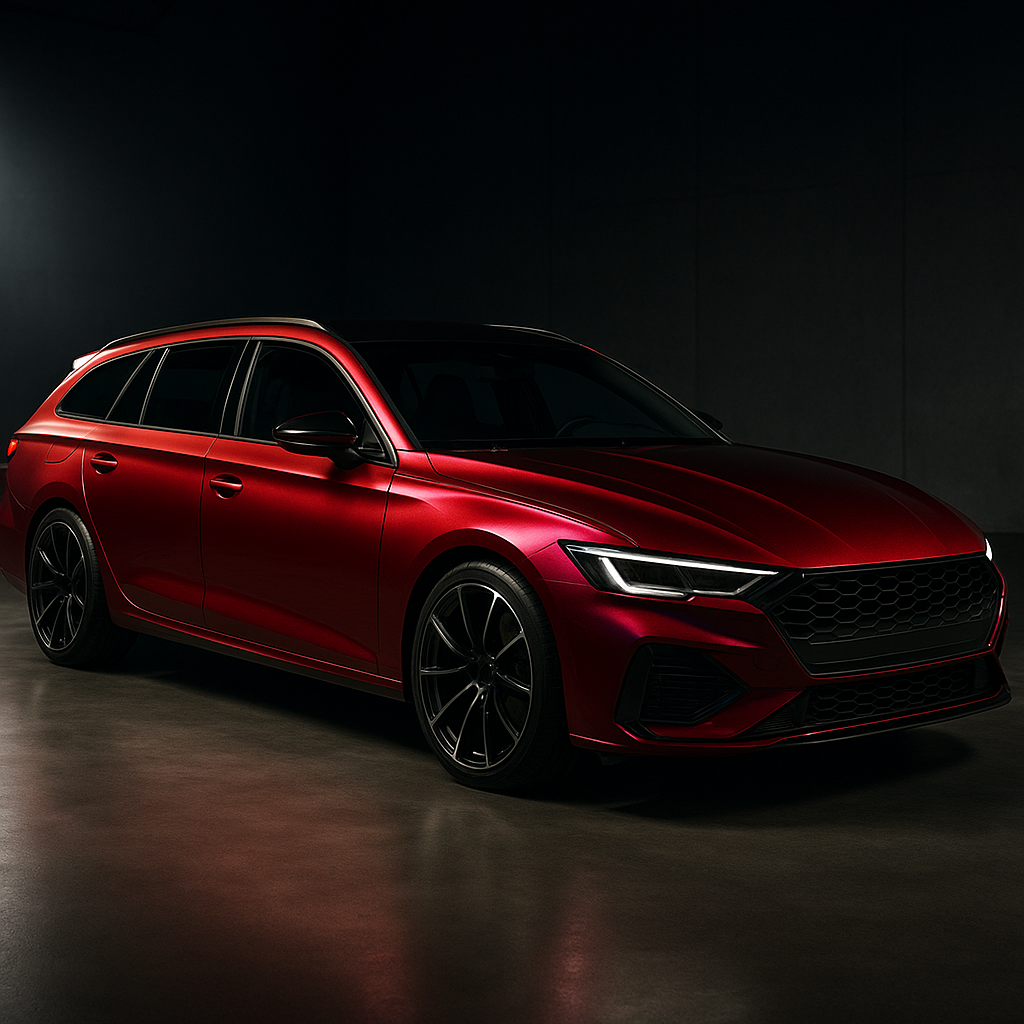
Explore the vehicle wrap trends expected in 2027, from sustainable materials and textured finishes to personalization, fleet branding, and AI design tools.
Vehicle Wrap Trends Going Into 2027: Materials, Design, and Technology to Watch
Vehicle wrapping is moving beyond simple color changes. As material technology improves and customers become more comfortable customizing cars, wraps are becoming a practical tool for personal expression, business branding, paint protection, and vehicle merchandising.
Going into 2027, the strongest trends will not come from one specific color or finish. They will come from better customization, faster decision-making, more durable materials, and designs that serve a clear purpose. Wrap shops, dealerships, fleet managers, and private vehicle owners can all benefit from understanding where the industry is heading.
1. More demand for personalized, low-commitment customization
Many vehicle owners want a distinctive appearance without permanently repainting the car. Vinyl wrap continues to fill that gap because it allows drivers to change the vehicle’s look while preserving the option to return to the original finish later.
In 2027, personalization is likely to become more detailed and less limited to a full color change. Customers may request partial wraps, roof treatments, hood graphics, mirror accents, racing stripes, geometric panels, and coordinated exterior details. A vehicle can be customized without covering every painted surface.
This shift creates more opportunities for wrap shops. Smaller projects can appeal to customers who are not ready to purchase a full wrap, while modular designs make it easier to refresh a vehicle over time. Shops that offer packages for subtle, moderate, and fully customized transformations will be better positioned to serve different budgets.
2. Textured and tactile finishes will become more important
Gloss, satin, and matte remain popular, but visual texture is becoming a larger part of the design conversation. Carbon fiber patterns, brushed-metal effects, forged textures, leather-inspired surfaces, and fine metallic finishes can give a vehicle more depth than a standard flat color.
These materials are especially useful for accent work. A textured roof, hood, grille surround, or mirror cap can create contrast without overwhelming the original design. On trucks and SUVs, textured finishes can also support rugged or outdoors-oriented branding.
Customers will increasingly want to know not only what color they are choosing, but how the surface will look under direct sunlight, shade, and indoor lighting. That makes accurate visualization more valuable during the sales process. A finish that looks subtle on a sample card may appear dramatically different when applied across a large hood or quarter panel.
3. Sustainable wrap options and responsible removal will gain attention
Environmental considerations are becoming more relevant across the automotive aftermarket. Vinyl wraps are not automatically sustainable, but manufacturers and installers are exploring ways to reduce waste, improve product efficiency, and make removal and disposal more responsible.
Going into 2027, customers may ask more questions about material composition, production methods, liner waste, durability, and end-of-life handling. Some buyers will look for products with lower environmental impact, while businesses may prefer suppliers that provide clearer sustainability information.
The installation process will matter as much as the material. Accurate measurements, efficient panel planning, proper storage, and careful removal can reduce unnecessary waste. Shops can also strengthen their credibility by explaining how old film is handled and by avoiding claims that a product is “eco-friendly” without supporting information.
Sustainability will likely be a purchasing factor, but it will still need to compete with performance, appearance, warranty coverage, and price.
4. Color-shifting and light-responsive effects will expand beyond show cars
Color-shifting films have traditionally been associated with enthusiast builds and attention-grabbing projects. As product choices improve, these effects are likely to appear more often on daily drivers, specialty vehicles, and promotional fleets.
The appeal is clear: the vehicle can appear to change color as the viewing angle or lighting changes. This creates a dynamic appearance that cannot be replicated easily with conventional paint. However, color-shifting film requires careful product selection and realistic customer expectations. The effect depends on the base color, lighting conditions, panel shape, installation quality, and viewing angle.
Rather than treating these materials as a universal solution, shops can position them as premium options for customers who want a more expressive finish. Digital previews should show the design from multiple angles so the buyer understands how the effect may appear in real life.
5. Commercial wraps will become more targeted and measurable
Businesses are becoming more selective about vehicle graphics. A company vehicle is not just mobile advertising; it is part of the customer experience and brand identity. In 2027, commercial wrap design will likely focus more on clarity, audience targeting, and measurable outcomes.
Effective fleet graphics will use fewer competing messages, stronger contrast, recognizable brand assets, and contact information that can be understood quickly. QR codes, short URLs, social handles, and campaign-specific landing pages may be incorporated when they support a clear marketing objective.
Fleet managers may also request standardized designs that work across vans, pickups, box trucks, trailers, and service vehicles. The challenge is maintaining consistent branding when body dimensions vary. Scalable design systems, rather than one fixed artwork file, will become increasingly important.
Businesses may also want to compare different design concepts before committing to a fleet order. A visual approval process can reduce internal delays and help decision-makers understand how graphics will look on the actual vehicle types they operate.
6. Dealerships will sell more appearance upgrades before delivery
Vehicle customization is becoming part of the dealership opportunity, particularly for trucks, SUVs, performance cars, and certified pre-owned inventory. Wraps, blackout packages, accent graphics, PPF, and tint can be presented as appearance upgrades during or after the vehicle purchase.
Going into 2027, dealerships may offer more pre-delivery personalization instead of referring every customer to an outside installer. This can create additional revenue while helping buyers visualize a finished vehicle before taking delivery.
The key is simplicity. Buyers do not want to navigate a complicated design program while completing a vehicle purchase. They need a short menu of understandable packages, transparent pricing, and a realistic preview. Dealers that make the process easy can turn customization into a natural part of the sales conversation.
7. AI visualization will move from novelty to everyday sales tool
AI-powered vehicle visualization is expected to become a standard part of how customers research and purchase wraps. Instead of waiting for a designer to create every concept manually, a customer can explore several directions during an initial consultation.
This does not eliminate the need for professional design or installation expertise. It helps customers communicate their preferences and helps shops qualify projects faster. A visual preview can answer basic questions such as whether a color suits the vehicle, whether a graphic is too busy, or whether an accent package feels balanced.
For shops, the commercial benefit is speed. More concepts can be shown during the same conversation, and customers can make decisions with a clearer understanding of the proposed result. For dealerships and fleets, visualization can simplify approvals among multiple stakeholders.
The best tools will combine fast generation with practical context. A useful preview should reflect the correct vehicle shape, show the design from relevant angles, and make it clear that final results can vary depending on material, lighting, panel contours, and installation.
8. More wrap designs will be built for photography and social sharing
Vehicle owners increasingly discover customization ideas through social media. That means designs are often judged in two environments: in person and through a phone camera.
In 2027, expect more attention to strong silhouettes, distinctive side profiles, reflective details, layered graphics, and finishes that create visual interest in photographs. Builders may design vehicles specifically for content creation, events, product launches, and influencer collaborations.
However, a design that photographs well may not always work as an everyday finish. Shops should discuss maintenance, visibility of dirt, fingerprints, rock chips, and the way a material looks in ordinary daylight. The most successful projects will balance social-media impact with practical ownership.
9. Installation quality and aftercare will remain major differentiators
As more businesses offer vehicle wraps, customers will have more difficulty comparing providers based only on price. Installation quality will become an even more important differentiator.
A professional shop should explain surface preparation, panel removal, seam placement, post-heating, edge finishing, care instructions, and warranty limitations. Customers should also understand that film lifespan depends on climate, storage, washing methods, exposure, and the condition of the underlying paint.
In a competitive market, shops that document their process and show consistent finished work will have an advantage. Education can be part of the customer experience, not just an afterthought after installation.
How wrap shops can prepare for 2027
Shops do not need to adopt every new trend at once. A practical approach is to evaluate each trend according to customer demand, material availability, installation difficulty, and profit potential.
Start by building a sample library that includes popular standard films, premium textures, color-shifting options, and partial-wrap examples. Create clear packages for personal vehicles, commercial graphics, and dealership upgrades. Train staff to explain durability and maintenance honestly. Most importantly, make the design approval process fast without sacrificing accuracy.
A strong digital workflow can help shops respond to inquiries, present concepts, collect approvals, and move qualified prospects toward a quote. The goal is not to replace expertise. It is to remove unnecessary delays between a customer’s idea and a confident purchasing decision.
Vehicle wrap trends going into 2027 will be shaped by personalization, practical branding, improved materials, and visual commerce. WrapMyRide AI can help shops, dealerships, and fleet teams show customers realistic design directions earlier in the process, making it easier to explore and approve a vehicle wrap concept.