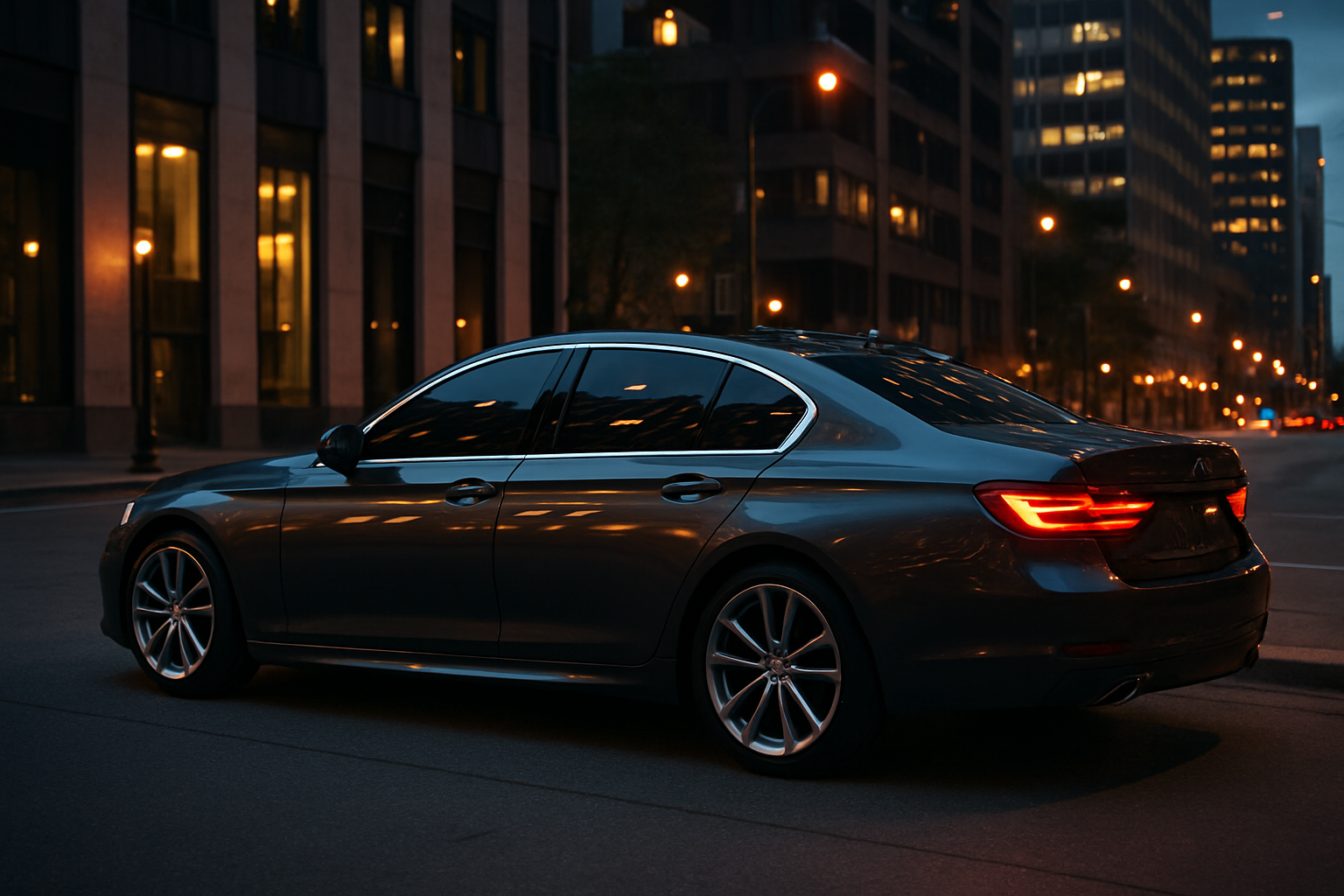
Window tint percentages explained: what each VLT level looks like from the outside, which is legal in most states, and how to preview tint on your own car before installation.
Window tint percentage is one of the most confusing decisions car owners face when adding tint. The numbers — 5%, 20%, 35%, 50% — refer to VLT, or Visible Light Transmission: the percentage of visible light the film allows through the glass.
Lower numbers mean darker tint. Higher numbers mean lighter tint. But knowing the number is not the same as knowing what it looks like. This guide shows you exactly what each common tint level looks like from the outside, which levels are legal in most states, and how to preview tint on your own car before booking an appointment.
What VLT Means in Window Tint
VLT stands for Visible Light Transmission. It measures how much visible light passes through the window film as a percentage of total available light.
A 5% VLT film blocks 95% of visible light. A 50% VLT film blocks 50%. The darker the tint, the lower the VLT number.
Note that VLT is measured through the film alone. Your car's factory glass also has a VLT rating, usually between 70% and 80%. When you apply tint film over factory glass, the combined VLT will be lower than the film's standalone rating. Tint shops calculate combined VLT to help you comply with local laws.
5% VLT — Limo Tint
5% VLT is the darkest tint commonly available and is referred to as limo tint. From the outside, it is nearly impossible to see into the vehicle in any lighting condition.
Appearance from outside: Black. No visibility into the cabin whatsoever.
Visibility from inside: Good in daylight, reduced at night. Nighttime driving can be uncomfortable because so little ambient light enters.
Legality: Illegal on front side windows in virtually every US state. Allowed on rear windows in many states. Check your local regulations before applying 5% to any window.
Best for: Rear windows on sedans, SUVs, and trucks where privacy is the priority and legal restrictions are less strict.
20% VLT — Dark Tint
20% VLT is the most popular tint level chosen by car owners who want visible darkness without limo-level blackout. From the outside, it is difficult but not impossible to see into the vehicle during daylight hours.
Appearance from outside: Noticeably dark. Strong privacy effect in most lighting conditions.
Visibility from inside: Comfortable in daylight. Somewhat restricted at night, especially when turning or merging.
Legality: Illegal on front side windows in most US states. Allowed on rear windows and rear windshields in many states. Some states with more permissive tint laws allow 20% on fronts.
Best for: Rear windows where strong privacy is desired without the total blackout of 5%.
35% VLT — Medium Tint
35% VLT is the most common legal limit for front side windows in the United States. It provides a noticeable tint appearance while maintaining good daytime and nighttime visibility.
Appearance from outside: Clearly tinted. You can see inside but it requires more effort in direct sunlight.
Visibility from inside: Excellent in daylight. Very comfortable at night — this is where 35% outperforms darker tints for safety.
Legality: Legal for front windows in a majority of US states. Almost universally legal for rear windows.
Best for: Front side windows across all vehicle types. The go-to choice for drivers who want a balanced tint that is legal, looks great, and does not compromise night visibility.
50% VLT — Light Tint
50% VLT is a subtle, light tint that is barely noticeable from the outside but still blocks half of incoming visible light along with the UV radiation that causes fading and heat buildup.
Appearance from outside: Minimal darkening. The glass appears slightly tinted but not dramatically different from factory glass.
Visibility from inside: Essentially identical to factory glass. No nighttime visibility reduction.
Legality: Legal almost everywhere, including front windshields in some states (with restrictions).
Best for: Drivers who want UV protection and minor heat reduction without changing the car's exterior appearance, and those in states with strict tint laws.
Window Tint Laws by State: What to Know
Tint laws vary significantly across US states. The most important variable is whether the restriction applies to front side windows, rear side windows, the rear windshield, or all windows.
Common front window limits: 35% VLT in California, New York, Florida, and Texas. Some states like Nevada and Arizona allow darker fronts.
Rear window rules: Most states allow any tint level on rear windows as long as the vehicle has functioning rearview mirrors.
Penalties: Tint violations are handled at traffic stops and can result in fines, required film removal, or vehicle inspection failures.
Always verify the current tint law in your specific state before installation. Laws change, and enforcement varies by county and city.
How to Preview Window Tint on Your Own Car
The best way to choose a tint percentage is to see it on your actual vehicle before installation. Sample cards held up to a window give a very limited impression of how the full car will look.
AI window tint visualizers like WrapMyRide AI let you upload a photo of your own car and instantly preview how 5%, 20%, 35%, and 50% tint looks on your real windows — before any film is applied.
This helps you decide with confidence rather than guessing based on a small sample. You can share the preview with your installer and arrive at the appointment already knowing exactly what you want.