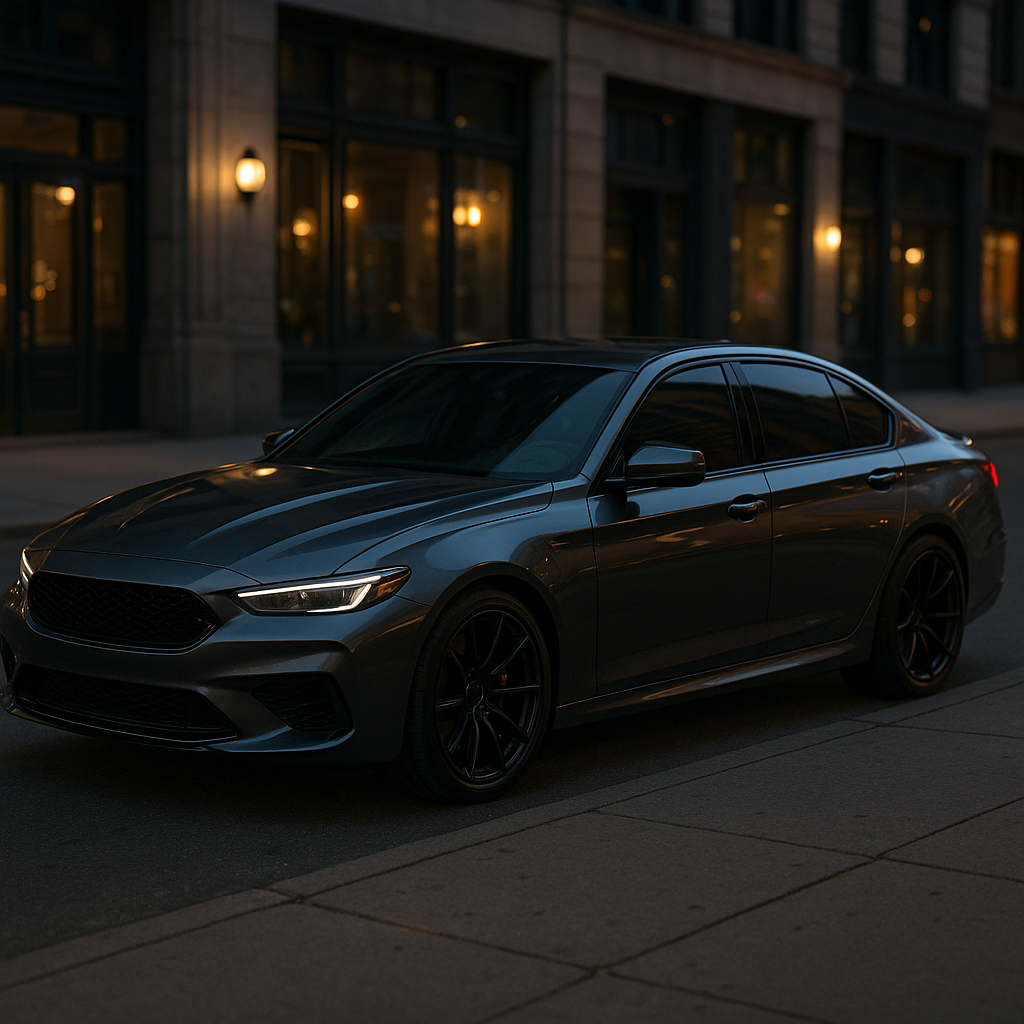
Compare window tint for privacy, UV defense, heat reduction, and visibility so you can choose the right film for your vehicle.
Window Tint for Privacy vs UV Protection: What Matters Most?
Window tint can make a vehicle look better, feel cooler, and provide more comfort on sunny drives. But buyers often focus on one question: should the tint be selected mainly for privacy or UV protection?
The answer depends on your priorities, but privacy and UV protection are not the same feature. A very dark film may make it harder to see into your vehicle, while a lighter, higher-quality film can block nearly all harmful ultraviolet radiation without significantly changing the appearance of the glass.
Understanding the difference helps you choose tint based on actual performance rather than darkness alone.
Privacy Tint and UV-Protection Tint Solve Different Problems
Privacy tint is designed primarily to limit visibility into the cabin. It is usually associated with a darker appearance, lower visible light transmission, and a more concealed interior. This can help keep personal items out of sight and make the vehicle feel more private when parked or driven in traffic.
UV-protection tint is engineered to filter ultraviolet radiation from sunlight. Its purpose is to help protect skin, reduce fading and deterioration of upholstery, and limit the long-term effects of sun exposure. UV-blocking performance is determined by the film’s construction and adhesive system, not simply by how dark the film looks.
A high-quality ceramic or premium dyed film can provide strong UV protection at a relatively light shade. Conversely, an inexpensive dark film may offer less overall performance than expected if it has poor UV-blocking characteristics.
What Window Tint Actually Does for UV Protection
Ultraviolet radiation is divided into UVA and UVB wavelengths. Vehicle glass blocks much of the shorter UVB radiation, but standard automotive glass does not necessarily eliminate all UVA exposure. Side and rear windows may allow more UVA transmission than many drivers realize.
Quality automotive window films are commonly designed to block approximately 99% of UVA and UVB radiation. This can help in several ways:
- Reduce direct UV exposure for drivers and passengers
- Help slow fading, cracking, and discoloration of seats and door panels
- Protect dashboards, trim, carpeting, and other interior materials
- Improve comfort for people who are sensitive to sunlight
- Add another layer of protection during long commutes or road trips
UV performance should be verified through the manufacturer’s published specifications or independent testing. Do not assume that a darker appearance automatically means better UV protection.
How Much Privacy Does Darker Tint Provide?
Dark tint can make it more difficult to see the vehicle’s interior from outside, especially when the cabin is shaded and the exterior is brightly lit. It can also reduce glare from objects inside the vehicle and make valuables less noticeable when the car is parked.
However, privacy is affected by more than the film’s shade. Several factors influence how visible the cabin will be:
- Interior color and materials
- Exterior lighting conditions
- Whether the interior lights are on
- The angle of observation
- The vehicle’s factory privacy glass
- The amount of sunlight behind the viewer
- The presence of cargo, passengers, or window shades
At night, privacy can change significantly. If the interior lights are on, people outside may still see into the cabin even through fairly dark tint. Likewise, a vehicle with a light-colored interior may reveal more than one with black upholstery at the same tint level.
For that reason, window film should be considered a privacy aid, not a guarantee of concealment.
Does Darker Tint Provide More UV Protection?
Usually, no. Darkness is measured by visible light transmission, or VLT. A 20% VLT film allows approximately 20% of visible light to pass through, while an 80% VLT film allows approximately 80% through. Lower VLT means a darker appearance, but it does not directly measure ultraviolet performance.
A lighter film can block nearly the same amount of UV radiation as a dark film when both are made with similar technology. This is especially useful for drivers who want skin and interior protection without heavily reducing visibility.
The same principle applies to heat rejection. Some premium ceramic films reject substantial infrared energy while remaining relatively light. A basic dyed film may look dark but provide less heat reduction. When comparing products, review UV rejection, infrared rejection, total solar energy rejected, glare reduction, and warranty terms separately from VLT.
Privacy vs Visibility: The Safety Tradeoff
The biggest drawback of very dark tint is reduced visibility, particularly at night, in rain, in parking garages, and on poorly lit roads. Dark rear tint may be manageable for some drivers, but applying an overly dark film to front side windows or the windshield can make it harder to identify pedestrians, cyclists, lane markings, and nearby vehicles.
Visibility is also affected by the film’s optical quality. Poorly installed or low-grade film may create haze, distortion, bubbling, purple discoloration, or distracting reflections. These problems can undermine safety even when the tint technically complies with local law.
A practical approach is to use stronger privacy on rear windows where permitted and choose a lighter, optically clear film for front windows. Windshield films should be selected with particular care. Some products are designed to be nearly transparent while still providing UV and heat protection, but local regulations may restrict windshield applications.
Check Local Tint Laws Before Choosing a Shade
Tint laws vary by state, province, and municipality. Regulations may specify minimum VLT for the windshield and front side windows, allow darker rear windows on certain vehicles, require side mirrors at particular tint levels, or prohibit reflective and colored films.
Factory privacy glass can also affect the final result. Its darkness is built into the glass, while aftermarket film is applied on top. The combined VLT can be lower than the film’s advertised percentage. For example, applying a dark film over already tinted glass may produce a result that is significantly darker than expected.
Before installation, confirm:
- Minimum legal VLT for each window
- Whether windshield tint is allowed and where it may be placed
- Rules for reflective, metallic, or colored films
- Medical exemptions, if applicable
- Documentation or certification requirements
- Whether the installer can measure the finished VLT
A reputable shop should discuss compliance before recommending a shade.
Which Type of Film Is Best for UV Protection?
Most quality automotive films can provide strong UV protection, but construction affects heat rejection, appearance, durability, and signal compatibility.
Dyed Film
Dyed film is often the most affordable option. It can improve appearance and privacy, but it may provide less heat rejection than premium products and can fade over time depending on quality and exposure.
Carbon Film
Carbon film typically offers a more stable color and better heat performance than entry-level dyed film. It provides a matte or non-reflective appearance and is often a practical middle-ground choice.
Ceramic Film
Ceramic film uses non-metallic ceramic particles to reject heat and block UV radiation without relying on a very dark shade. It generally offers strong optical clarity and does not interfere with cellular, GPS, satellite radio, or keyless-entry signals when properly manufactured.
Metallic Film
Metalized film can provide effective heat and glare reduction, but its reflective appearance may not suit every vehicle. It can also interfere with radio, GPS, or mobile signals, depending on its construction.
If UV protection is the priority, ask for documented UV rejection. If privacy is the priority, compare the actual installed shade under daylight and nighttime conditions rather than judging only from a sample card.
How to Choose the Right Balance
For many drivers, the best solution is not the darkest possible tint. It is a balanced configuration that provides UV protection on every applicable window, added privacy in the rear, and clear visibility in the driver’s field of view.
Consider this decision process:
- Check local tint regulations before selecting a VLT.
- Decide whether your main concern is privacy, heat, glare, UV exposure, or appearance.
- Ask for the film’s tested UV and infrared performance.
- Account for existing factory privacy glass.
- View samples from inside and outside the vehicle.
- Test how the shade looks in daylight, shade, and nighttime conditions.
- Choose an experienced installer who offers a written warranty.
If you spend long hours driving, have leather or dark-colored interiors, or regularly park in direct sun, UV and heat performance may matter more than maximum darkness. If you transport equipment, work materials, or personal belongings, rear privacy may justify a darker legal shade.
The Bottom Line
Privacy and UV protection should not be treated as interchangeable. Dark tint can reduce visibility into the cabin, but darkness alone does not prove that a film blocks ultraviolet radiation. For most vehicles, the strongest overall choice is a legally compliant, high-quality film that combines verified UV rejection with a shade that preserves safe visibility.
Use darker rear tint only where appropriate, and consider lighter ceramic or optically clear film for areas where visibility and UV protection are both important. A professional installer can measure existing glass, explain the legal limits, and recommend a combination that fits your vehicle and daily use.
WrapMyRide AI’s window tint visualizer can help you preview different tint shades on your vehicle before installation, making it easier to compare privacy and appearance options with greater confidence.